Last time we followed the thread from one woman with a problem to the company she built around it. This week the thread widens. Some of our favorite brands are not run by one person, but by a family, a couple, two people who happened to be in it together from the start.
What that looks like varies. Some are husband-and-wife teams who started at a kitchen table. Some are one person carrying a dog's name forward. What they share is that the person who answers your email is the same person who built the thing, and that tends to keep a company honest in a way size does not.
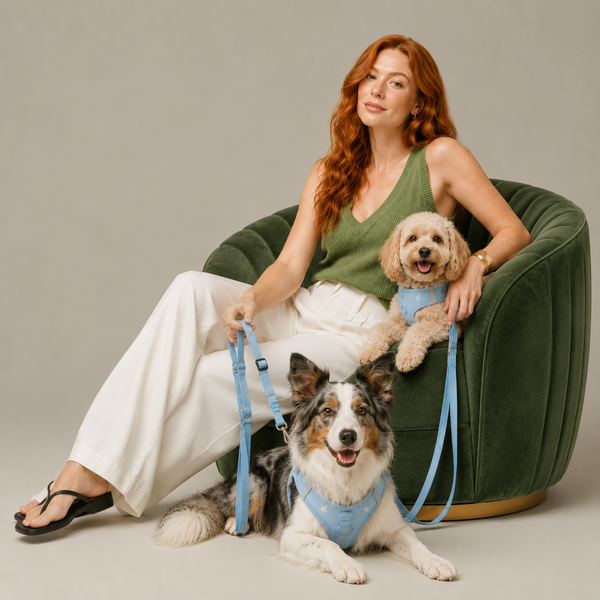
K9 Sport Sack. Jen and Joseph Watson adopted Daisy, a short-legged terrier rescued from a dumpster, and could not take her along on bike rides. So Jen sewed the first front-facing dog backpack on a home sewing machine. They sold a hundred hand-made bags out of a booth at a Las Vegas pet expo and built the company from there, out of Orem, Utah. In 2020 Utah named them Small Business Persons of the Year. Shop K9 Sport Sack
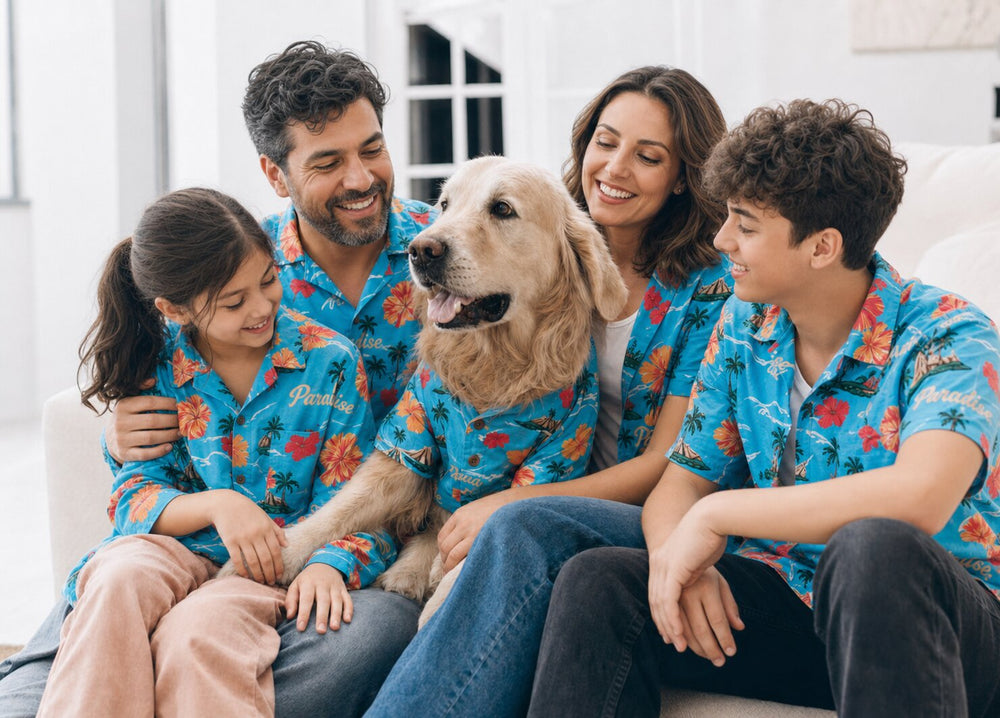
Good Thomas. It started with Gina, a Pomeranian-poodle named Thomas, and a Fourth of July outfit she could not find anywhere that was not tacky. So she sewed one, then a matching set for herself and her husband Scott, and Dog Threads was born in Bloomington, Minnesota. Thomas passed away in 2018, and the family carried his name forward into Good Thomas, alongside a sister project called Dog Club Social built around helping homeless dogs find homes. Shop Good Thomas
Jiby Dog Crew. Simon and Leia rescued a once-shy shelter dog named Khaleesi and launched Jiby in Los Angeles in 2020 around pet apparel. When COVID shut down their factories in Korea, they pivoted to bowl stands built from upcycled skateboards. The badge-style charms they call Jibys, made to clip onto any collar, became the signature. Every one sold sends another to a dog still waiting in a shelter. Shop Jiby Dog Crew
Wagsly's two cents: A brand that started because two people wanted a nervous shelter dog to feel brave. I approve.
Lucky & Friends. A delivery driver found a rescue named Lucky and brought him to a no-kill shelter in Park City, Utah, where he found Scott. Scott already ran a certified freeze-drying facility that had spent years drying food for other pet and human brands, so he put that plant to work on his own recipes, built with vets and canine nutritionists. The result is whole-food, gently cooked, freeze-dried dog food, made by someone who already knew exactly how to do it safely. Shop Lucky & Friends
Mr. Peanut's Pet Carriers. Michael's Boston Terrier, Peanut, was diagnosed with kidney issues, and Michael had already spent years designing pet travel products for airlines and other businesses. He built Mr. Peanut's in Henderson, Nevada in Peanut's honor: airline-approved, vegan and cruelty-free carriers, with a giving program called Pay a Shelter Pet Forward. The brand identifies itself as family-run, though it is Michael's name on every public page we could find. Shop Mr. Peanut's
West Paw. At twenty-three, Spencer Williams bought a small cut-and-sew shop in Livingston, Montana called Pet Pals that made fabric pet toys. He moved it to Bozeman in 1998 and built it into a real manufacturing operation instead of sending the work overseas. West Paw is a certified B Corp and Montana's first Benefit Corporation, and the Zogoflex toys are engineered to be mailed back and recycled into new ones rather than thrown out. Shop West Paw
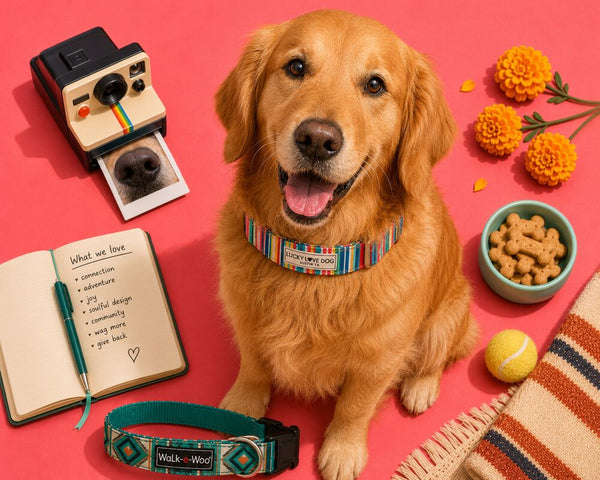
WaLk-e-Woo. Wendy Jones is a self-described crazy dog lady and former marketing consultant who could not find collars in Denver that were fun, durable, and not overpriced. So in 2002 she started sewing them by hand and selling to local boutiques. The company is still family-owned, more than twenty years and a lot of collars later. Shop WaLk-e-Woo
Wagsly's two cents: Every single one of these started because somebody's dog needed something that did not exist yet. I find that very reasonable.
What runs through all of them
None of these companies started as a business plan. They started with a dog. Daisy could not go on bike rides. Thomas needed a Fourth of July outfit. Khaleesi needed to feel brave. Peanut got sick. The business showed up afterward, built to solve the actual problem, by the actual person who had it.
That is a different kind of accountability than a company built to hit a growth target. When the founder is still the one who answers the email, a mistake does not disappear into a support queue. It gets fixed by the person who has something to lose if it is not.
See all the family-owned brands
A few of these families have something else in common. They have been making things in the same American town for decades, long enough that the work has become a kind of inheritance. That is its own value, and it is where we are headed next. Made in USA and the heritage brands, coming up.
The Wuforia team (and Wagsly)